
· by Michael Blair, Nashville's Roofers
A roof-over puts new shingles directly on top of the old ones, skipping the tear-off and the haul-away. The 2012 International Residential Code calls it a roof recover: an additional covering installed over a prepared existing one without removing it. On the right roof it is allowed. It also hides things and can cost you warranty coverage, and the reasons are worth understanding before the quote arrives.
How many layers does the code allow on a roof?
That 2012 code requires every existing layer to come off where the roof already has two or more applications of any type of roof covering, so a second layer is the ceiling and a third is out. The 2012 International Building Code uses the same wording. Metro Nashville now builds to the 2024 editions, adopted with local amendments, so ask Metro Codes or your roofer to confirm the current section before relying on the older text. The code does not say the layer limit is about weight, but it does require the roof framing to carry the whole roof covering system, plus the materials and equipment loaded onto it during the work.
Allowed is not the same as advisable, and there are other conditions. The same section rules out a recover where the existing roof is water-soaked or has deteriorated too far to serve as a base, and over wood shakes, slate, clay or cement tile. The shingle maker adds its own: TAMKO’s Heritage application instructions say to nail down or remove curled and broken shingles first, note that buckled shingles usually mean warped decking or protruding nails, and tell the installer to inspect the deck before re-covering. In Nashville a new layer also needs a permit, since Metro Codes’ renovation table lists a new layer of roofing alongside replacing more than a third of the roof, while Metro’s residential permit procedures exempt repairs to an existing roof that stay within 33 percent of its area.
What do you give up with a roof-over?
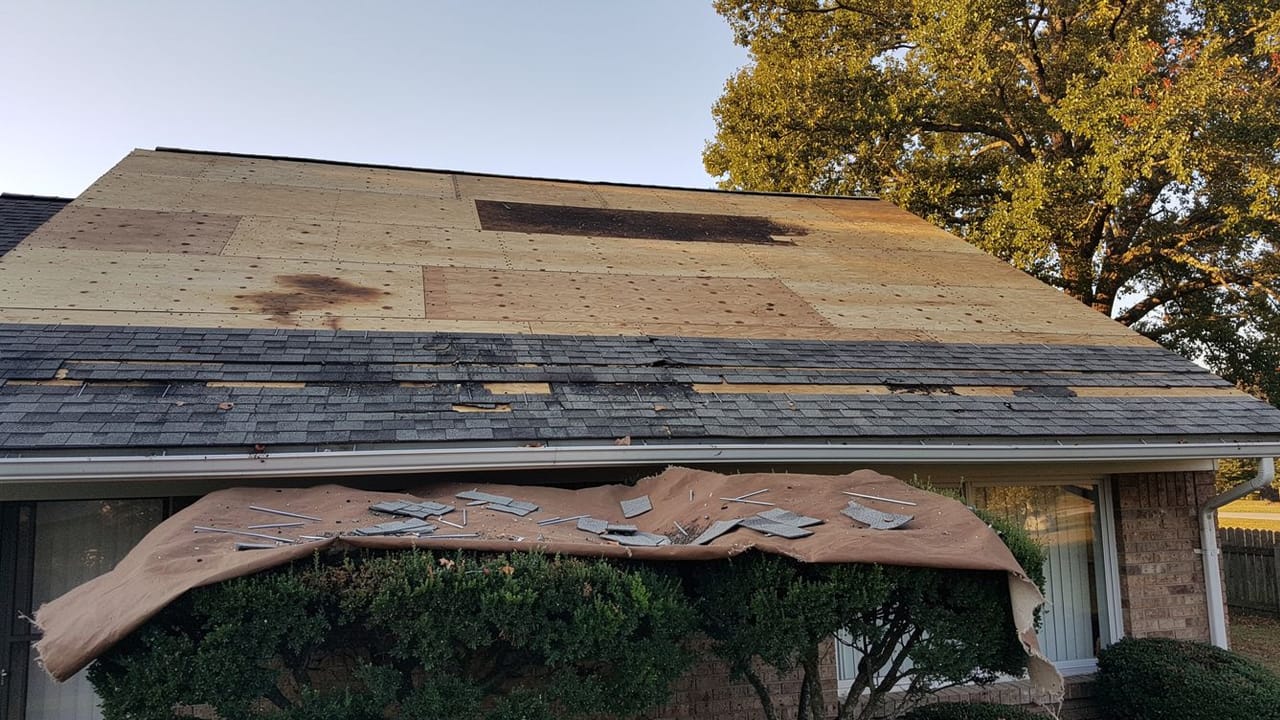
The single biggest loss is information. Tearing off exposes the whole deck, and that is when rotten sheathing, old leak staining, failed flashing and poor nailing can be seen and put right, which is why your estimate includes decking as a line of its own. With the old shingles left on, a deck inspection is limited to the edges, the attic and whatever gives underfoot. What stays covered is found by the next roofer, at the next replacement.
The second is warranty. TAMKO’s warranty page makes its enhanced system warranties available only on a full tear-off or all-new roofing over every roof plane of the building, and its application instructions offer high-wind application on new construction or complete tear-offs only, never on a re-cover. Its standard limited warranty for fiberglass shingles, effective January 1, 2025, carries no overlay exclusion that we could find, and other manufacturers write their own terms. An overlay may keep the basic coverage and lose the upgrades, and the only way to know for a given shingle is to ask.
How it looks and how it seals
New shingles laid over old follow the surface underneath. TAMKO does not recommend laminated shingles directly over existing laminated ones, because the unevenness of the multi-layered surface below can keep the sealant from sealing properly. Laminated shingles over three-tab that is flat and essentially intact, the same instructions call acceptable.
Flashing is the other issue. The 2012 code’s reroofing section requires existing flashings, edgings, vents and similar parts of the assembly to be replaced when they are rusted, damaged or deteriorated, and TAMKO’s instructions for a re-cover say to pull all the drip edge metal and replace it with new. A replacement is the time to renew the step flashing at walls, the boot at every pipe and the valley metal. On an overlay, ask which of those are on the quote and which are staying put. Our post on where roofs actually leak goes through those joints one at a time.
- A limited view of the deck underneath
- Some enhanced and high-wind warranties limited to tear-offs
- Old flashing left in place unless the quote names it
- Laminated over laminated not recommended by at least one shingle maker
- A second layer means the next roof must be a tear-off
When an overlay is a reasonable call
On a roof with one flat, sound layer, on a house being sold or transitioned within a few years, where the budget genuinely does not stretch to a tear-off, an overlay buys real time. It is a defensible short-horizon decision made with the facts in hand, and the fair way to make it is with an overlay and a full roof replacement quoted side by side. A tear-off also leaves you free to change materials, and our post on choosing between metal and asphalt shingle in Tennessee covers how hail, attic heat and the years you plan to stay weigh on that choice.
It stops being defensible when it is sold as equivalent. If a quote presents a roof-over and a tear-off at similar life expectancy and similar warranty, check that against the manufacturer’s own terms. Ask specifically what the shingle maker warrants on an overlay and get the answer in writing, and if you would like a second pair of eyes on the roof before you decide, ask us for a free estimate.
Sources
- International Code Council, 2012 International Residential Code (archived at archive.org) — Section R907: roof recover definition; tear-off required over two or more existing applications, a water-soaked or deteriorated roof, and wood shake, slate, clay or cement tile; structure must carry the roof covering system; rusted or damaged flashings replaced
- International Code Council, 2012 International Building Code (archived at archive.org) — Section 1510.3: the same two-application limit on recovering
- Metro Nashville Codes, Adopted Codes for Metro Nashville — Metro now enforces the 2024 IRC and IBC with local amendments (BL2025-898)
- TAMKO, Heritage Shingle Application Instructions (Rev. 07/31/2024) — Inspect the deck before re-covering; curled and buckled shingles; laminated over laminated not recommended; replace all drip edge; high-wind application on tear-offs only
- Metro Nashville Codes, Building Permits Central: Renovate a Single-Family Residence — A new layer of roofing, or replacing more than a third of the roof, needs a permit; the permit triggers inspections
- TAMKO, Warranties — Enhanced system warranties only on full tear-off or all-new roofing over every roof plane
- TAMKO, Fiberglass Asphalt Shingle Limited Warranty (effective January 1, 2025) — Standard limited warranty text, which contains no overlay exclusion
- Metro Nashville Codes, Residential Building Permit Procedures — Permit required for roofing; repairs to an existing roof up to 33 percent of the roof area exempt
FAQ
Roofing Over Old Shingles or Tearing Off — questions
Does a roof-over need a permit in Nashville?
In most cases, yes. Metro Codes lists a new layer of roofing as needing a building permit, the same as replacing more than a third of the roof, and its residential permit procedures exempt only repairs to an existing roof that cover no more than 33 percent of the roof area. The permit brings an inspection, so a roofer proposing to skip it on an overlay is skipping that inspection too.
How can I tell how many layers my roof already has?
Look at the rake edge or a cut edge at a valley or vent, where the stack of shingles is visible from the side, and count. Any roofer quoting the job should check it before pricing. If there are already two layers, the model building code calls for a tear-off before the next roof goes on, whatever the budget.
Does an overlay affect a home sale?
It can. A buyer’s inspection may well note a second layer, and it narrows what the next owner can do. The code does not allow a third layer, so their only option is a full tear-off, with two layers to strip and haul away instead of one.
What is a roof overlay?
New shingles laid directly over the old ones, skipping the tear-off and haul-away. The 2012 International Residential Code calls it a roof recover and allows it only where there is a single existing layer that is sound, not water-soaked and not wood shake, slate or tile, and Metro Nashville requires a permit for it.