
· by Michael Blair, Nashville's Roofers
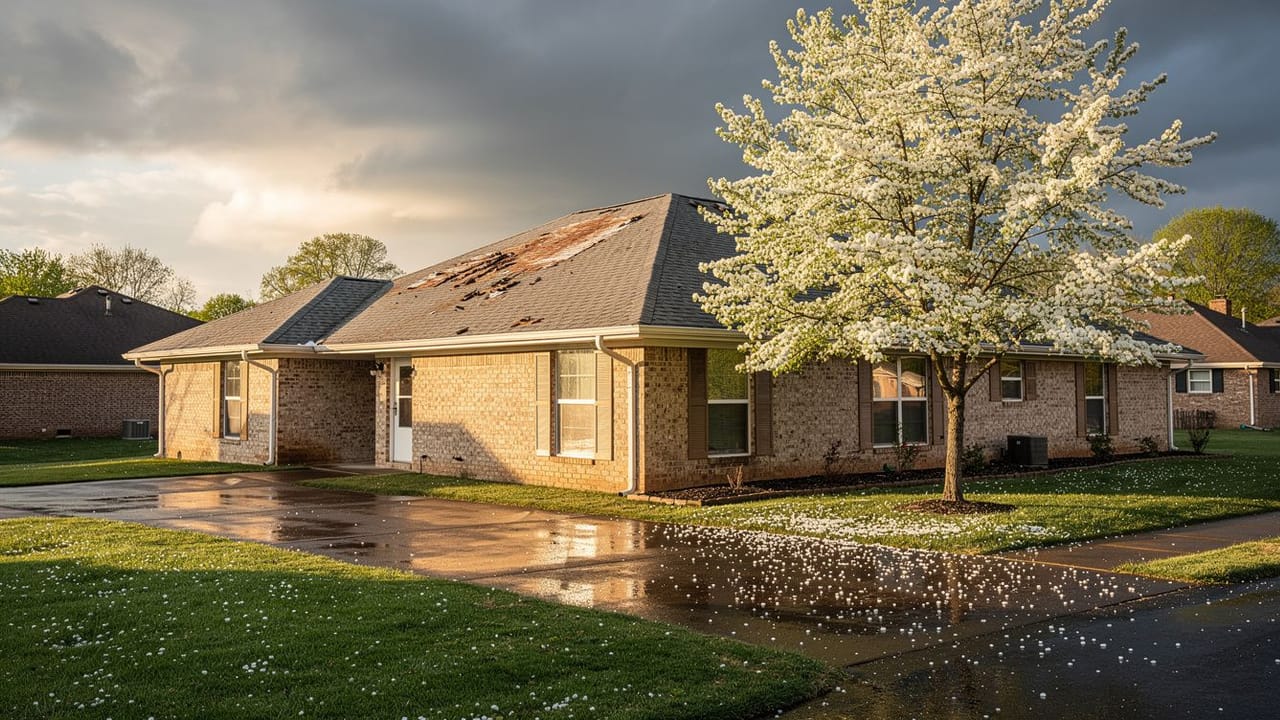
Middle Tennessee isn’t hail alley. NOAA’s National Severe Storms Laboratory puts that where Nebraska, Colorado and Wyoming meet, and the Storm Prediction Center’s severe weather climatology finds large hail reported most often in a band from Rapid City, South Dakota, and Denver to Dodge City, Kansas, and Springfield, Missouri. A roof here can still end up as an insurance claim, and when it does, how much the check covers turns on two terms in the policy. Replacement cost pays what it takes to put the roof back at today’s prices. Actual cash value pays that figure minus depreciation, as the Tennessee Department of Commerce and Insurance explains in its guide to the two terms, and the older the roof, the more of it the insurer counts as used up.
The two ways a roof is valued
The state’s glossary of insurance terms defines replacement cost as coverage that pays the amount needed to replace the structure without deducting for depreciation, up to the policy’s maximum dollar amount. Actual cash value is the current cost to replace it minus depreciation, and the insurer decides how much depreciation to take. TDCI’s worked example is a $10,000 roof, five years old, with a $1,000 deductible. If the company counts $500 a year of wear, that’s $2,500 off, the deductible takes another $1,000, and the actual cash value check comes to $6,500. Under replacement cost, with the same roof now costing $11,000, the company pays $10,000.
Not every house qualifies for replacement cost on the roof. TDCI says companies inspect properties and decide case by case what they’ll offer, based on the property’s condition and their own underwriting guidelines, and it encourages shopping around at renewal as well as when you first buy. The declarations page and any endorsements are where your policy says which valuation you have. If you see a roof payment schedule or anything about cosmetic damage there, ask your agent what it does to a roof claim before you need to make one.
How is a replacement cost roof claim paid?
Even under replacement cost, the first check may be only the actual cash value. In the department’s example, the insurer pays the $6,500 up front and reimburses the difference after a receipt for the new roof comes in. That held-back amount is what we call recoverable depreciation; the state describes how it works without using the label. Since the money follows the receipt, the second payment comes once the roof is replaced and paid for.
Check your policy for any time limit on finishing the work and sending in that receipt. When we replace a roof under a claim, we itemize the final invoice so it lines up with the adjuster’s estimate, because that paper is what releases the held-back depreciation. Our insurance claim help page covers what we photograph and write down for the insurer, and our post on the roofer and the claims adjuster covers the inspection itself.
- First payment: the actual cash value, less the deductible
- Roof replaced and the receipt submitted
- Second payment: the depreciation that was held back
- Any deadline for the second step is in the policy
The exclusions that catch people
The valuation isn’t the only line that can shrink a roof check. The same glossary defines the deductible as the amount the insured pays on a loss before the company owes anything. Read whether your policy sets a separate deductible for wind or hail, and if it does, whether it’s a flat amount or a percentage of the dwelling coverage. Turn a percentage into dollars now, then hold it up against what a modest roof repair would run, because that comparison decides whether a small storm is worth a claim.
Look for any wording about cosmetic damage, too, and ask your agent how it would treat dents in metal panels, vents or flashing that still keep water out. On shingles, we look for bruising and granule loss on the inspection itself, and our post on telling hail damage from ordinary roof wear explains how we separate a storm mark from a roof that has simply aged.
What should you check before the next storm?
Read the declarations page now and find out which valuation the roof carries. If it’s actual cash value on a roof well into its life, a claim may pay much less than a new roof costs. TDCI notes that an owner paid on actual cash value can make up the difference for a roof of similar quality or put the money toward a roof available at that price, so plan for the gap. If the roof is due for replacement anyway, ask your agent whether the new roof would qualify for replacement cost, since the department says condition is one of the things a company weighs.
Keep the date and the invoice from the last roof replacement, along with a few photographs of the roof in good condition. The department’s disaster recovery guidance tells homeowners to be ready to give the adjuster a record of improvements made before the damage, to photograph or video the damage itself, and to save every receipt. If you’d like the roof looked over before storm season, ask us for a free estimate.
Sources
- Tennessee Department of Commerce and Insurance, Knowing Your Insurance Policy: Actual Cash Value v. Replacement Cost (updated March 30, 2026) — ACV is replacement cost minus depreciation; the $10,000 five-year-old roof example; first payment may be ACV with the difference reimbursed on a receipt; eligibility by condition and underwriting; shop at renewal.
- Tennessee Department of Commerce and Insurance, Glossary of Insurance Terms — Definitions of replacement cost (limited by the policy maximum), actual cash value and deductible.
- Tennessee Department of Commerce and Insurance, Consumer Disaster Recovery Resources — Record of prior improvements for the adjuster, photographs of the damage, saving receipts; getting several bids and checking licenses.
- NOAA National Severe Storms Laboratory, Severe Weather 101: Hail Basics — Hail alley is where Nebraska, Colorado and Wyoming meet.
- NOAA Storm Prediction Center, Severe Weather Climatology — Large hail reports most common from Rapid City, SD to Denver, Dodge City, KS and Springfield, MO.
FAQ
ACV or RCV: What Your Roof Policy Actually Pays — questions
How do I know if my roof is covered at replacement cost?
It is on the declarations page or in an endorsement attached to the policy. Look for the terms replacement cost, actual cash value, or a roof payment schedule. Coverage can change at renewal, so read the renewal documents each year rather than relying on the original policy, and ask your agent if the wording is unclear.
What is recoverable depreciation?
On a replacement cost policy, the insurer may pay the depreciated value first and hold back the rest. That held-back amount is what is called recoverable depreciation. Tennessee’s Department of Commerce and Insurance describes the difference being reimbursed after a receipt is submitted, so the roof has to be replaced before it is paid. Check the policy for any deadline.
Is it worth claiming for minor hail damage?
Not always. Get the roof inspected so you know the extent of the damage, then compare the repair cost with your deductible, including any separate wind and hail deductible. Before hiring anyone, the state advises getting more than one bid, asking for references and proof of licensing, and being wary of door-to-door sellers who want payment upfront.
Should I tell my insurance company about a new roof?
Yes, it is worth asking your agent whether the new roof qualifies for replacement cost, since Tennessee’s insurance department says a roof’s condition is one of the things a company weighs. Keep the date and invoice from the replacement and a few photographs of the roof in good condition, because an adjuster may want that record later.